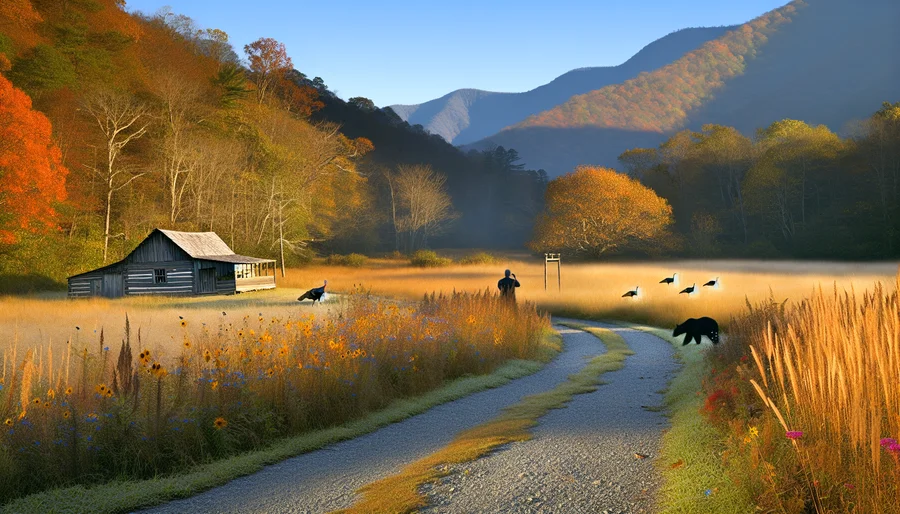
Exploring the Rich Diversity of Cades Cove Animals
Cades Cove, located in the heart of the Great Smoky Mountains National Park, is famous for its Cades Cove animals. This verdant valley offers a unique opportunity to see diverse wildlife in their natural surroundings. Families, solo travelers, and adventure seekers will find unforgettable experiences by understanding when and where to spot these animals.
The Majestic Black Bears of Cades Cove
Black bears are among the most iconic Cades Cove animals. The forested areas around the cove provide an ideal habitat for these magnificent creatures, which are typically sighted from April to November. They’re most active at dawn and dusk. For safety, maintain a distance of 100 yards and never attempt to feed or approach them. The Cades Cove Loop Road offers numerous vantage points. Locals suggest the Rich Mountain Road exit for a less crowded route where bears are frequently spotted.
White-Tailed Deer Grace the Fields
White-tailed deer are a common sight among Cades Cove animals, easily observed grazing in open fields throughout the year. Their cautious movements and twitching tails delight photographers. Winter months provide excellent visibility. Visit the John Oliver Cabin early or head to Hyatt Lane at dusk for a clear view. Binoculars are recommended to enhance your experience, particularly during foggy conditions.
Raptors in the Skies
The skies over Cades Cove are lively with raptors like red-tailed hawks and turkey vultures. These birds of prey are often seen circling fields or perched in trees, especially during spring and fall migrations. Sparks Lane is an ideal spot for observing these majestic birds hunting for rodents. A field guide and a spotting scope can enrich your bird-watching experience.
Wild Turkeys in the Open Plains
Wild turkeys, with their strutting and gobbling, bring charm to the landscape. They’re easily spotted near fields, particularly in the morning and late afternoon. The spring mating season is the best time to see them. Drive down Laurel Creek Road just before entering the Cades Cove Loop for a closer look. Keeping a wildlife journal can be an educational activity for families, allowing them to document the behaviors and traits of these intriguing creatures.
Discovering Smaller Fauna
Cades Cove is home to a variety of smaller animals and insects. Opossums, raccoons, and red foxes are more elusive and active at night. During the day, butterflies like the Eastern Tiger Swallowtail and Great Spangled Fritillary flutter through the meadows. Exploring the nature trails, such as the Abrams Falls Trail, can lead to unexpected encounters with these creatures. A species checklist can inspire curiosity about these lesser-known Cades Cove animals.
Timing Your Visit for Wildlife Viewing
Visiting Cades Cove at the right time enhances wildlife viewing experiences. Spring and fall migrations bring heightened activity. Visiting at sunrise or sunset often provides the best sightings. Those unfamiliar with the area might consider a guided tour for insights and increased chances of spotting rarer wildlife. Guided bike tours on Wednesday and Saturday mornings offer peaceful, intimate wildlife viewing when the loop is closed to vehicle traffic.
Maximizing Your Wildlife Adventure
Enjoying the diverse Cades Cove animals requires preparation and respect for nature. Packing essentials like high-quality binoculars and a camera with a good zoom lens can make wildlife watching more comfortable. Remember to be quiet, maintain a respectful distance from wildlife, and adhere to Leave No Trace principles to help preserve Cades Cove for others.
Whether you’re fascinated by a soaring hawk, the quiet grace of a deer, or a turkey’s splendid presence, Cades Cove offers a vibrant array of life to observe and enjoy. This guide will assist in planning your visit, ensuring you remain open to the awe-inspiring world of Cades Cove animals.













Share This Page